Here's Hazel Nunn, of Cancer Research UK, talking today about the dramatic increase in rates of mouth cancer in the UK. Full report here.
Tuesday, August 11, 2009

Friday, August 7, 2009
Is dairy healthy?
 A few years ago, a common sight on English door-steps was that of garden birds pecking through the tin foil tops of milk bottles. It no longer is - for the milk in the bottles no longer contains a top layer of cream. This is mainly because most families have moved to semi-skimmed or even skimmed milk, low in cream.
There have been other changes. On the table you may find cream and butter substitutes. One popular butter substitute is made from olive oil, another from pine tree oil. As we have frequently reported, olive oil and similar vegetable oils are the height of healthy eating. Farm products - milk, butter, cheese, cream, meat and eggs - are regarded with suspicion or as occasionally luxuries or treats, even though they have been a staple part of human diet for thousands of years.
In the 1970s the withdrawal of free school milk from schools was a big issue. When free food was returned to schools in the 1990s, it was fruit, not milk.
Now a remarkable study in the journal Heart suggests this view may be flawed. The evidence is powerful because it has been collected over 70 years and is based on a pioneering study of British eating habits. Researchers set out to relate the fate of the people in the study to their childhood eating habits - which had been well documented. The findings show no evidence that children who were stuffed with full-cream milk products had unhealthy hearts or circulation. And in fact they had the lowest death rates of any of their generation - and also enjoyed low death rates from stroke.
And the chances are that these children enjoyed a full cream diet. In the 1930s, if you could afford it, you could have a full cream pudding on your table every day - notably blancmange and rice pudding. There was also sago pudding, tapioca pudding, ground rice pudding.
Now, of course, this study does not compare the 1930s diet with a more modern diet. But it does chronicle a generation of Britons that has lived for longer and more healthily than ever before. It may be that those brought up on semi-skimmed milk and olive oil butter substitutes will do even better.
So for this 1930s generation, a childhood rich in full cream did no harm. One possibility is that it also had a big impact on the health of the bones - rendering dairy eaters less prone to bone breakages, falls and orthopaedic operations. That might explain their reduced death rates.
The big question about the research is whether dairy products were the only healthy factor in the children's diets. Maybe they consumed more milk and cheese because their families were wealthier than others. Perhaps a healthy level of calcium in the diet was an indication of a proper diet - as opposed to the restricted diet that poorer families might have lived on in the turbulent 1930s.
The detailed breakdown of the findings tends to bear this out. About 25 per cent of the children ate at least twice as many dairy products as others. These tended to come from high status social groups and to be taller and better fed than other children, getting about 20 per cent more energy than others in their daily diet. However they did not necessarily eat as many vegetables or as much fat as other children.
So although it is true that the high calcium levels in the children's diets probably reflected their families' greater wealth than others, it does not disprove the benefits of calcium and milk products. For, if wealth leads to better health, there must be a way this is achieved. And it is the high intake of dairy products - of all those milk puddings, rather than of fruit and vegetables - that stands out as a key feature of these 1930s families.
The researchers write: "Dairy products are important contributors to children’s intake of protein, vitamins and minerals and they play an important role in the maintenance of bone health.
"The beneficial effects of dairy and calcium intake suggested by this study were seen at estimated intake levels that are similar to the currently recommended intake amount for dairy and calcium in children."
More reports on diet and health here.
Wednesday, May 6, 2009
New osteoporosis guidelines
This is a post to allow readers to discuss the item:
Experts update osteoporosis guidelines
Englemed has no more information about this item than is reported in the story or is available in other related news items and cannot give advice.Monday, April 27, 2009
Swine flu alarm

This is a post to allow readers to discuss the swine flu public health emergency.
Here's a list of our reports on this issue to date:
Full story of the swine flu epidemic here:
Early stories:
Complacency warning as swine flu spread slows
Swine flu cases pass thousand
Pigs catch swine flu from man
Hundreds in flu testing
Swine flu alerts raised as spread continues
Swine flu spreads - causes mild illness
Swine flu travels the globe
New flu vaccine hope
swine flu alarm.
Englemed has no more information about this item than is reported in the stories or is available in other related news items and cannot give advice.
Tuesday, April 21, 2009
Music - the food of the heart
This is a post to allow readers to discuss the item:
Music - the food of the heart
Englemed has no more information about this item than is reported in the story or is available in other related news items and cannot give advice.Broccoli and the stomach
This is a post to allow readers to discuss the item:
Broccoli fights deadly stomach bug
Englemed has no more information about this item than is reported in the story or is available in other related news items and cannot give advice.
Broccoli fights deadly stomach bug
Englemed has no more information about this item than is reported in the story or is available in other related news items and cannot give advice.
Bananas and blood pressure
This is a post to allow readers to discuss the item
Banana boost for blood pressure
Englemed has no more information about this item than is reported in the story or is available in other related news items and cannot give advice.
Banana boost for blood pressure
Englemed has no more information about this item than is reported in the story or is available in other related news items and cannot give advice.
Tanning injections
This is a post to allow readers to discuss the news item:
Tanning injections bring health risks
Englemed has no more information about this story than is reported in the news item and cannot give any advice.Comment
This is a post to allow readers to post comments on the news service in general or ask for a discussion thread on a particular news topic. We're going to set up some discussion threads on some of our most popular news items.
Thursday, April 16, 2009
We're on Facebook!
I've never been sure about this thing, Facebook, but recently took a tentative step into it. On my personal page friends rapidly accumulated and chit chat flowed. So there's now a page for Englemed on Facebook. It brings together some of our material - mainly that of interest to the youngish group who use Facebook - so the emphasis will be on family health news.
We'll also add occasional links to other articles of interest. For instance Andrew Wadge of the UK Food Standards Agency runs an impressive blog - which we link to from here.
You find it simply by searching for "Englemed" within Facebook. If you're a Facebook regular it's an easy way to check out some of our material - stories will simply appear on your "wall" if you sign on as a fan.
We'll also add occasional links to other articles of interest. For instance Andrew Wadge of the UK Food Standards Agency runs an impressive blog - which we link to from here.
You find it simply by searching for "Englemed" within Facebook. If you're a Facebook regular it's an easy way to check out some of our material - stories will simply appear on your "wall" if you sign on as a fan.
Wednesday, April 1, 2009
April Fools?
So far no sign of a good medical April Fool today. Perhaps everyone has learnt their lessons.
Reading the daily welter of health and medical headlines, you can of course never be sure.
Doctors may be feeling their pay rise announcement is a joke - but strictly speaking that was announced yesterday. Both our lead stories - an allergenic substance in shampoo and a new treatment for MRSA - were announced yesterday so they also are safe.
There's a welter of announcements from the UK Department of Health to mark the new financial year. I think they are meant to be serious although most wise people are avoiding making announcements today.
The BMJ has published a deadly serious story today - no chance of it being a spoof - and I happen to know that the lead author Chris Ham is a real person.
Aah, now here's a possible spoof on the Beeb: donkey milk and nine other ways to live to 100. The tips include fried egg and sausage sandwich. They've covered themselves by quoting from apparently real centenarians - so no evidence that these diets will help the ordinary Joe Bloggs.
Reading the daily welter of health and medical headlines, you can of course never be sure.
Doctors may be feeling their pay rise announcement is a joke - but strictly speaking that was announced yesterday. Both our lead stories - an allergenic substance in shampoo and a new treatment for MRSA - were announced yesterday so they also are safe.
There's a welter of announcements from the UK Department of Health to mark the new financial year. I think they are meant to be serious although most wise people are avoiding making announcements today.
The BMJ has published a deadly serious story today - no chance of it being a spoof - and I happen to know that the lead author Chris Ham is a real person.
Aah, now here's a possible spoof on the Beeb: donkey milk and nine other ways to live to 100. The tips include fried egg and sausage sandwich. They've covered themselves by quoting from apparently real centenarians - so no evidence that these diets will help the ordinary Joe Bloggs.
Monday, March 16, 2009
Lifestyle the key - it's a secret!
There's new evidence this week that European medicine is failing to tackle unhealthy lifestyles. Back in September we had a big grumble about the state of British medicine.
Now European researchers have concluded that just one third of high risk patients are referred to lifestyle programmes - by that they mean people with high blood pressure, high cholesterol and too much weight.
Instead doctors and health systems rely on treating patients by drugs, according to the EuroAspire report. This was my comment back in September.
It is in fact the same team whose work formed the basis of my September posting and at the time they did not mention the over-reliance on drugs. But they could already see evidence that European medicine, including Britain, has not taken on board the evidence about lifestyle collected by the Americans.
I still think they are right. British primary care is now finely organised to find high risk patients and this is likely to get better. But the answer, when a problem is found, is usually pills. To be fair, not always. Where I live they are now giving people free passes for the gym and swimming - but not much dietary advice. And the free passes are being snapped up by the worried well.
Are Professor David Wood and his team wrong? What do you think?
Now European researchers have concluded that just one third of high risk patients are referred to lifestyle programmes - by that they mean people with high blood pressure, high cholesterol and too much weight.
Instead doctors and health systems rely on treating patients by drugs, according to the EuroAspire report. This was my comment back in September.
It is in fact the same team whose work formed the basis of my September posting and at the time they did not mention the over-reliance on drugs. But they could already see evidence that European medicine, including Britain, has not taken on board the evidence about lifestyle collected by the Americans.
I still think they are right. British primary care is now finely organised to find high risk patients and this is likely to get better. But the answer, when a problem is found, is usually pills. To be fair, not always. Where I live they are now giving people free passes for the gym and swimming - but not much dietary advice. And the free passes are being snapped up by the worried well.
Are Professor David Wood and his team wrong? What do you think?
Thursday, February 5, 2009
Another embargo break
Where now for embargoes? Today sees another major break in the dam. The culprit so far as my monitoring can tell is The Times - that is the Times of London, for non-UK readers.
Another indication that something is afood is that The Times has gone to a lot of trouble to break a non-story. Their headline today - published at 11.11pm GMT on the web, is "Vitamin D is ray of sunshine for multiple sclerosis patients". This is not new and the latest research, which was due to be published at 10pm GMT on Thursday seems to be merely a scientific study explaining why this seems to be the case. Vitamin D generally requires sunshine and those of us who live in the northern half of the northern hemisphere do not get as much exposure as others.
A sad memo arrives from the publisher PLos Genetics: "Dear Colleagues, Please note that the embargo on this article has now been lifted due to an embargo break. We apologize for any inconvenience.
*****************************************************************************************************************
* * * * * EMBARGO: Thursday, 5th February 2009 * * * * * *
2PM PDT/ 5PM ET/ 10PM GMT ."
Please don't apologise. It's not your fault! As the release had been posted in the embargoed section of Eurekalert! you have to wonder what the fall out will be.
Another indication that something is afood is that The Times has gone to a lot of trouble to break a non-story. Their headline today - published at 11.11pm GMT on the web, is "Vitamin D is ray of sunshine for multiple sclerosis patients". This is not new and the latest research, which was due to be published at 10pm GMT on Thursday seems to be merely a scientific study explaining why this seems to be the case. Vitamin D generally requires sunshine and those of us who live in the northern half of the northern hemisphere do not get as much exposure as others.
A sad memo arrives from the publisher PLos Genetics: "Dear Colleagues, Please note that the embargo on this article has now been lifted due to an embargo break. We apologize for any inconvenience.
*****************************************************************************************************************
* * * * * EMBARGO: Thursday, 5th February 2009 * * * * * *
2PM PDT/ 5PM ET/ 10PM GMT ."
Please don't apologise. It's not your fault! As the release had been posted in the embargoed section of Eurekalert! you have to wonder what the fall out will be.
Wednesday, February 4, 2009
Dog eats dog over embargo row
Last year we predicted that embargo policies were going to come under increasing pressure because of on-line news (Englemed respects embargoes but with difficulty) and also because of the difficulty of observing US Time zones.
Yes, that's what has happened - and an almighty transatlantic row has broken out. The American Association for the Advancement of Science is affronted at European and British, in particular, attitudes and has been busy suspending or removing local outlets from access to its well-established Eurekalert! database. I'm told that organisations as diverse as The Telegraph, Die Welt and Ansa News have been suspended. The biggest row seems to be over the removal of the tabloid Sun newspaper from Eurekalert! over a science story Life on Mars.The Sun was later reinstated as a freelance had supplied the story.
Now the Association of British Science Writers is apparently to conduct a review of embargo policies. The UK Press Gazette has the story and the ABSW blog has some insights into the whole saga. More on this later maybe.
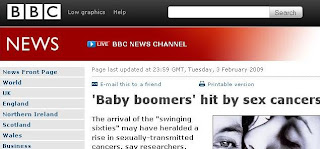
Meanwhile here's another embargo breach today, this time by the venerable old BBC. Wonder whether they will have their access suspended? You have to look at the times and dates - there is a 90 minute discrepancy.

Yes, that's what has happened - and an almighty transatlantic row has broken out. The American Association for the Advancement of Science is affronted at European and British, in particular, attitudes and has been busy suspending or removing local outlets from access to its well-established Eurekalert! database. I'm told that organisations as diverse as The Telegraph, Die Welt and Ansa News have been suspended. The biggest row seems to be over the removal of the tabloid Sun newspaper from Eurekalert! over a science story Life on Mars.The Sun was later reinstated as a freelance had supplied the story.
Now the Association of British Science Writers is apparently to conduct a review of embargo policies. The UK Press Gazette has the story and the ABSW blog has some insights into the whole saga. More on this later maybe.
Meanwhile here's another embargo breach today, this time by the venerable old BBC. Wonder whether they will have their access suspended? You have to look at the times and dates - there is a 90 minute discrepancy.


Subscribe to:
Posts (Atom)